Why Do Dogs Lick their Paws?
As we all know, our canine companions display many unique and humorous behaviors; including barking at random sounds, guarding their stuffed animals, and smelling each other’s booties to name a few!
Dogs are also known to lick at their paws and other parts of their body at times. Just like their other unique behaviors, licking is not done randomly. Done occasionally, licking of the paws or body is a typical grooming behavior. However, when done in excess, licking can indicate that there’s an underlying problem.
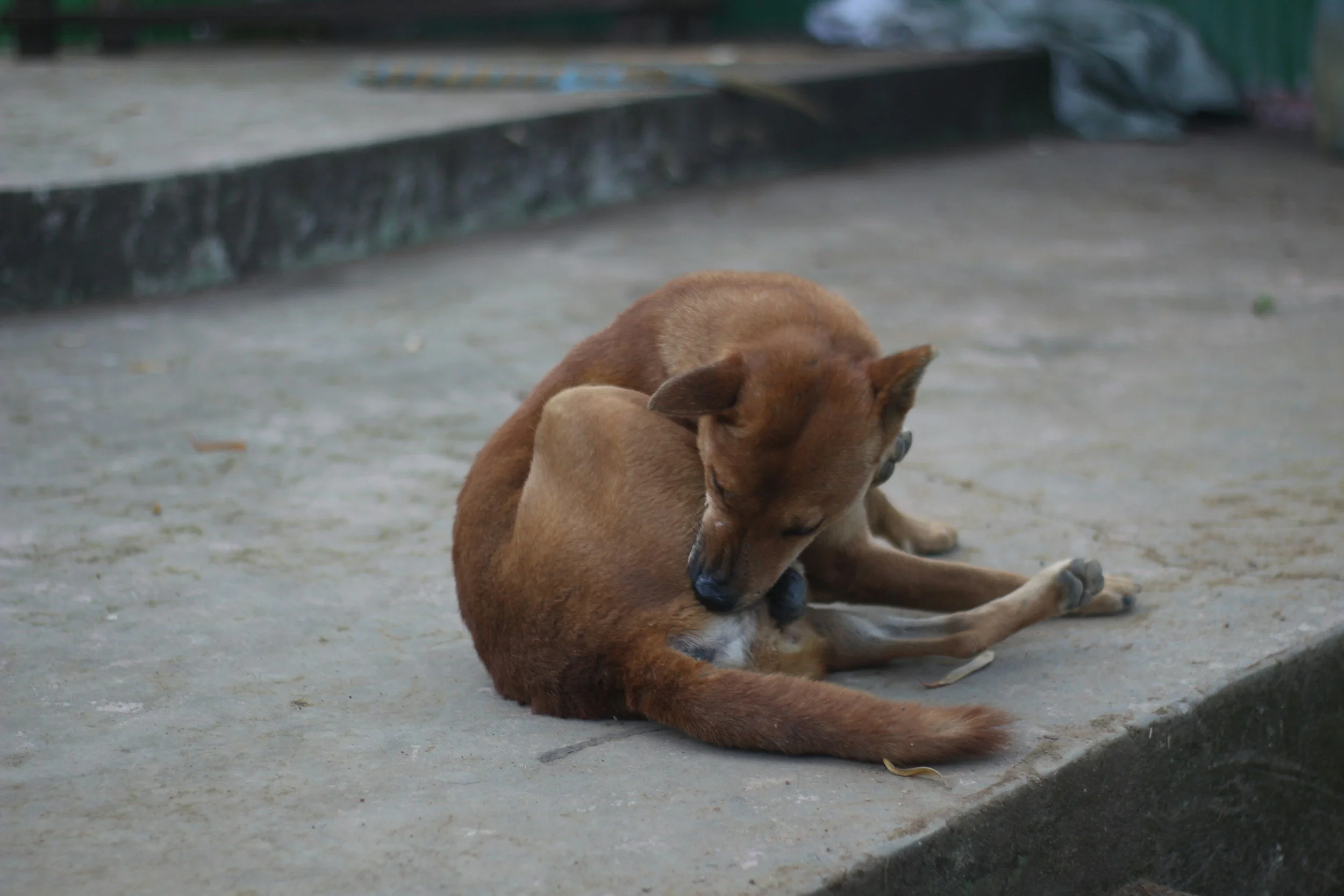
Injury
Licking a wound is an instinctual behavior, showing that at some point in canine history, licking a wound provided benefit for survival. Some of these benefits include…
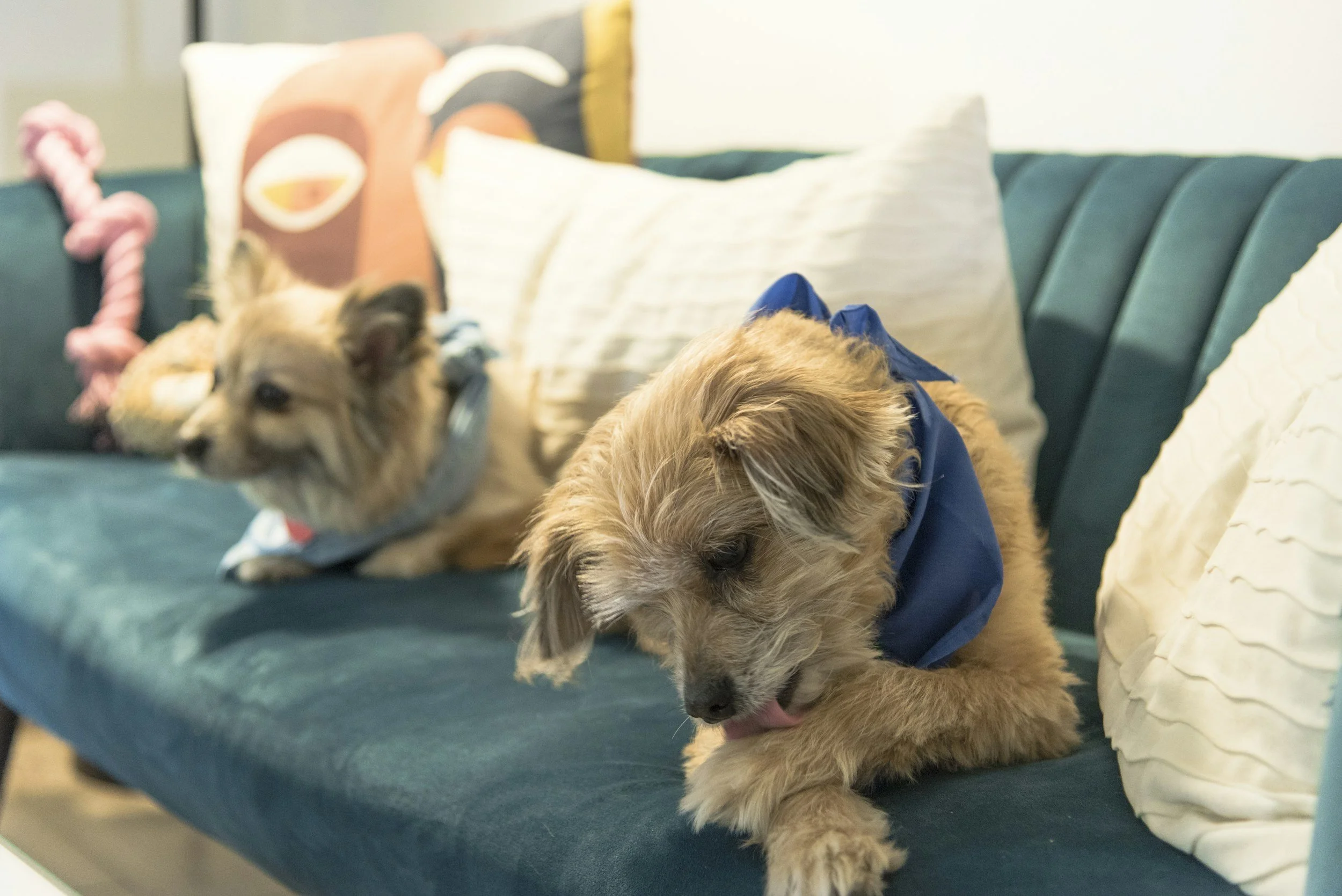
Soothing pain. When dogs lick their wounds, the pain signals and sensory signals created from licking are both sent through neurological messages to the brain and essentially compete for the brain’s attention. This reduces the amount of pain registered to the dog, creating a soothing sensation.
Saliva is able to kill some types of bacteria. Dog saliva isn’t sterile by any human standard, but it provides a chemically cleaning property to their wounds thanks to the enzymes and proteins found in their saliva. Along with this, the licking may physically clean the wound from grime and dirt from the licking motion.
Caution: Despite its evolutionary benefit, Vets recommend that you do not allow your dog to lick their wounds. Licking wounds pushes harmful bacteria found in a dog’s mouth into the open skin. This introduces the opportunity for the wound to become infected, making a whole lot more trouble for you and your pup.
Allergies
Itchy paws or other parts of the body can elicit licking. When licking is due to an allergy, the behavior is often accompanied by chewing, scratching, or a rash around the same area. Keep an eye out for the times of day that your dog is licking their paws – is it always after a walk, eating, or visiting the dog park? Something about the specific location or activity may be irritating them, such as the grass at a park or the floor cleaner at their doggy friend’s house!
Inflammation
Inflammation is one of the most common symptoms that something isn’t quite right, in human and canine health. It can be a sign that an underlying condition is causing discomfort in your pup. Clinically referred to as pododermatitis, chronic inflammation has the classic symptom of excessive paw itching and chewing. Unfortunately, licking and chewing at the paw can make the inflammation worse, creating a cycle of discomfort. The cause of inflammation could be allergies, but also has influence from the genetics, diet, and health of the dog. Certain breeds of dog – particularly bulldogs, mastiffs, and pitbulls – are at a higher risk of having inflamed paws due to their genetics.
Anxiety
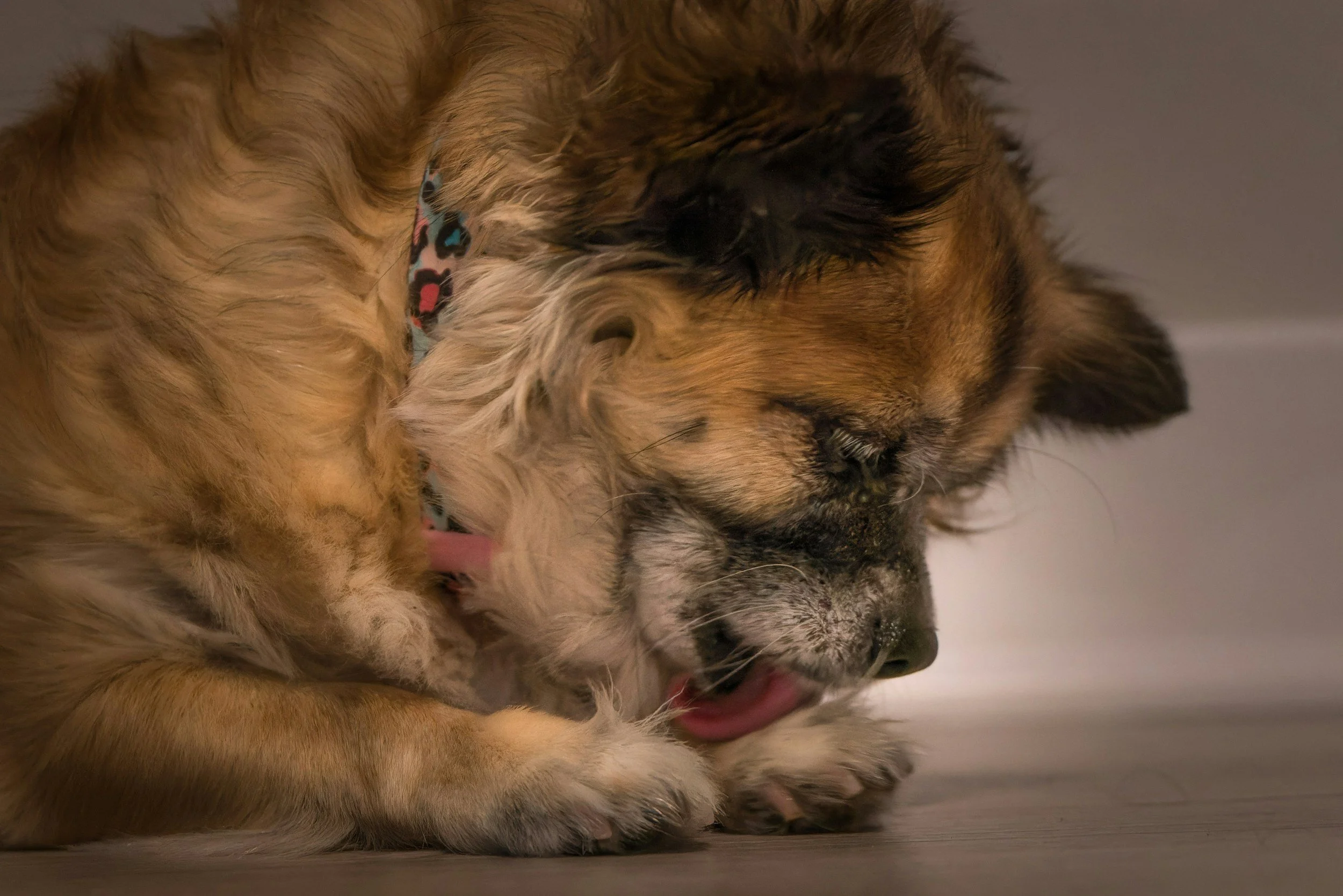
Licking is a low-energy, soothing action that’s easy for dogs to repeat. When they’re facing something anxiety inducing, such as separation from their person, or a loud unfamiliar sound, they may lick their paws or other parts of their body to bring themselves temporary comfort. This behavior is similar to how a person may chew their nails as a comfort mechanism! Anxious paw licking may also be seen with chewing or biting at the paws/limbs. Although repetitive licking may seem harmless, it may be best to redirect this anxious energy into a more fun and distracting activity. Some activities that may be equally soothing and distract from licking include lick mats or snuffle mats with their favorite treats, treat dispensing toys such as a Kong or Party Pupsicle, and hide-a-treat puzzle games.
Licking, though it may seem natural for your dog, is a sign that your dog is experiencing emotional or physical discomfort. It’s important to pay attention to when, where, and how often your dog is licking their paws to understand why they may feel the need to do so and to provide such information to your vet. If you’ve noticed your dog excessively licking, do not hesitate to contact your veterinarian for medical advice and help to make sure your dog is as happy and healthy as possible!
Conclusion
As we’ve come to find out, there are a multitude of reasons why dogs lick themselves. Some reasons for licking are harmless and part of normal canine behavior and routine, such as grooming. However, if you notice your dog is licking their paws (or any part of their body) repetitively and excessively, it may be a sign that something is wrong. If you notice repetitive and excessive licking, it may be time for a visit to the Vet to seek the root cause of your pup’s licking, and get it managed so they can be comfortable, happy, and healthy. While the sight and sound of your dog licking themselves may be a nuisance at times, it is also a helpful sign to you that they may need extra care from you or their doctor!
*This blog may contain affiliate links
Written By: Dog Tired Adventures Team
Co-author & Editor: Jessica Hays
Lead Dog Walker, Social Media & Community Outreach Associate
Sources
https://www.akc.org/expert-advice/health/why-does-my-dog-lick-chew-paws/