Bath Time: Turning a Battle into a Spa
Washing your dog can be a long process that leaves your pup cold, sad, and miserable. For some, it feels like coordinating and executing a CIA-level operation. However, there are some tips and tricks recommended by veterinarians and animal groomers that make the experience fast, manageable, and dare we say it: enjoyable!
This blog breaks down the how much, with what, and all the other the nitty-gritty details of giving your canine companion a bath.
How Often
It’s recommended to give your dog a bath at least once a month. Some dogs will need more consistent washing depending on their habits and length of coat. Pups with longer fur – think shepherds, retrievers, and spaniels – may need baths twice a month. The mud and dirt enjoyers will need baths — well — when dirty.
The Materials
Having the right materials is key to ensuring your pooch actually gets clean. We’ve laid it all out here:
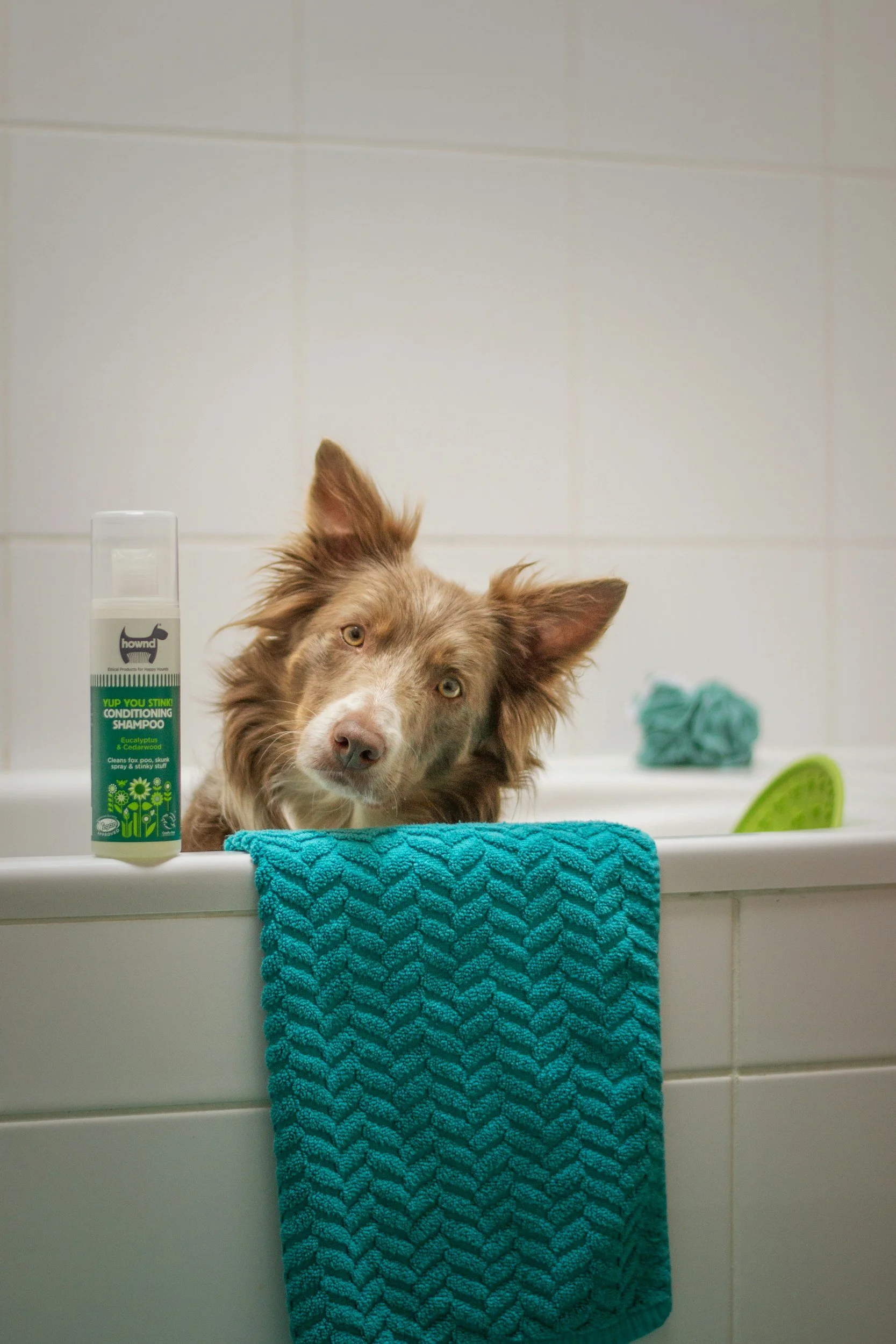
Doggy Shampoo — Due to different pH levels in dogs and people, human shampoo can be too harsh and cause irritation to dog skin. Pick up dog shampoo at your closest pet store or ask your vet for recommendations!
Conditioner — Conditioner is strongly recommended but not required.
Lots and lots of towels — No explanation required.
A washcloth — Their smaller size makes washing sensitive areas, namely the face, a much easier game.
Blowdryer — If your hound is on the inpatient side, a blowdryer can speed up the drying process tremendously.
The Steps
Now you’re suited up and ready to dive in! For a smooth process and great results, tackle the bath in this order.
Brush your pup before turning the water on. This will rid them of larger tangled items, such as sticks and burrs, and prevent matts of hair from solidifying further.
Have all materials ready and in arms reach before turning the water on! It’s essential to quickly access the next step while you have your pup in the tub, especially if they are not fond of bath time. Walk through every step and gather all needed materials before beginning.
Rinse dirt and grime off. This is necessary so that the shampoo can do its job most effectively by sudsing up into a full lather, as well as to rid your companion of the outermost layer of dirt.
Important: Avoid wetting the inside of their ears. The inside of ears can take a much longer time to dry than the rest of their fur, which puts the area at risk for infection.
Shampoo! Dilute the shampoo to make the process quicker. With diluted concoction, scrub and massage all over your pups body excluding the face and ears. If your pup’s shampoo has an ingredient that is added to medicate or soothe the skin in some way (like chlorhexidine, Benzoyl Peroxide, Oatmeal, or anti-flea/tick) it is typically recommended by veterinarians to let the shampoo sit on the fur and skin for a few minutes before rinsing in order to reap all of its benefits.
If your pup is extremely dirty, oily, or has a seborrheic condition (such as dandruff) it is good practice to shampoo twice for a deeper clean.
Washing the face and ears: Put some diluted shampoo on a washcloth and gently massage it on their face. Wet a clean washcloth and massage again to rinse! A dog-friendly wet wipe can also do the trick for faces and ears.
Condition. Similar to shampooing, massage conditioner all over their body excluding the face and ears. Again, avoid the inside of ears and face. If your pup is on the oilier side, this step may be omitted!
Drying! You’re done! Towel dry by placing towel on the back and rubbing, or blow dry on a low or cool setting. Brush as you dry for an extra silky coat and prepare yourself for the incoming case of zoomies!
Tips
Uncooperative dog? Use lots and lots of treats, or a dog-friendly food such as peanut butter. Feed them a couple treats/a lick of tasty goodies in between steps and especially after good behavior to motivate them to cooperate. Remember, reinforcement must be consistent to be effective!
Steel wool in the drain is a great preventative measure for keeping your drains unclogged of wet dog hair while letting the water flow. The last thing we want is a drain full of soggy dog hair and twigs!
Conclusion
That’s it! What once was a grueling, long, and uncomfortable process is now efficient and relaxing. Though the experience may be messy and may be uncoordinated at first, it will get easier with practice and a schedule.
For more advice specific to your pet, talk to your veterinarian or groomer on the topic. Be patient with your pup (and with yourself) if they are not fans of bath time and make it difficult. The more you bath them in a regimented way, the easier it will be for them to understand that bath time is not so bad after all!
*This blog may contain affiliate links
Written By: Dog Tired Adventures Team
Co-author and Editor: Jessica Hays
Lead Dog Walker, Social Media & Community Outreach Associate