Canine VS Feline: An Introduction Guide
New Addition to the Family?
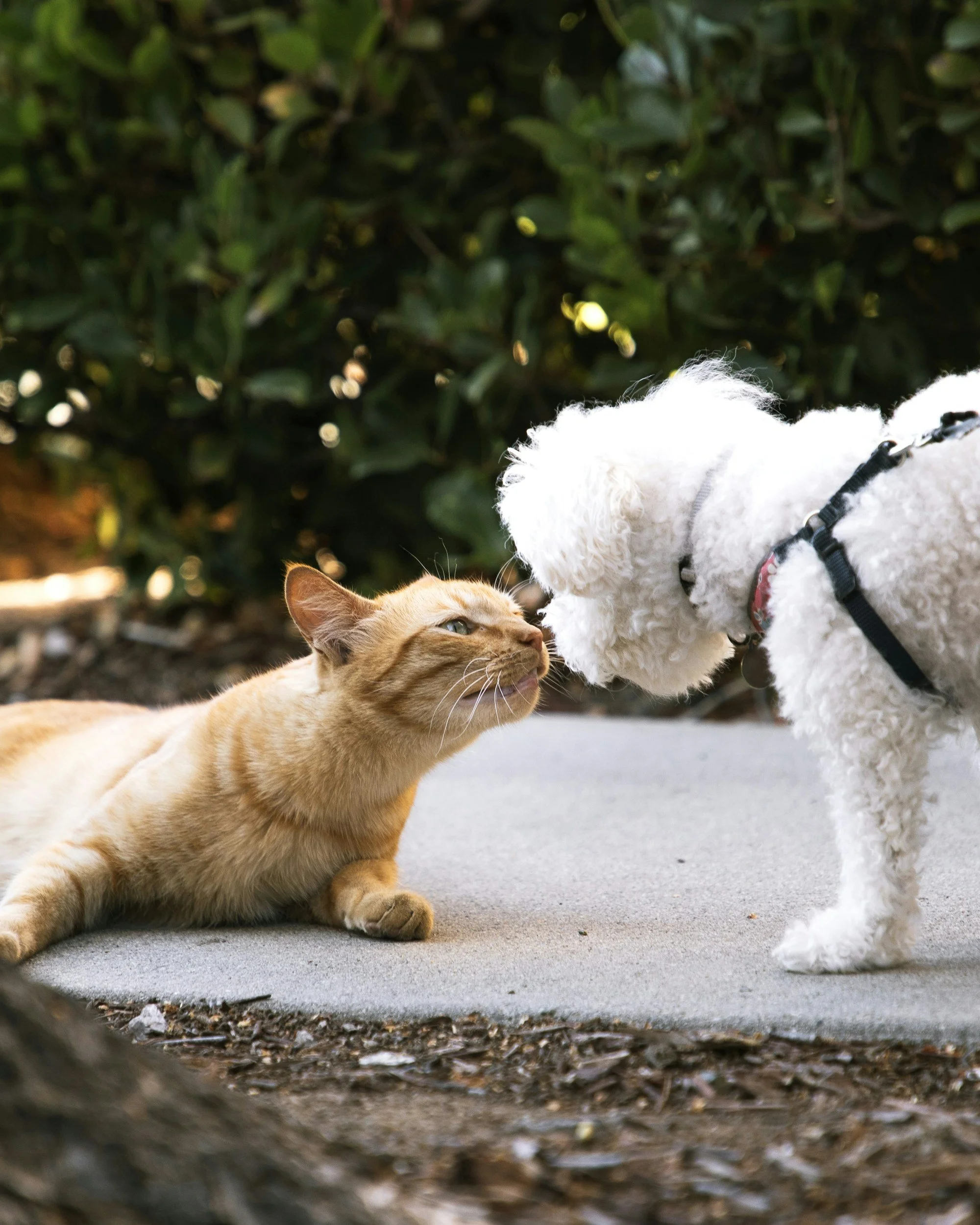
While there are plenty of people that are biased toward being “dog people” or “cat people,” more often than not, pet owners and animal lovers have a desire to care for both species! It is no secret that cats and dogs are more than able to get along, occupy the same space, and even really care for each other in ways that are so amazingly adorable to see. However, in many cases pet parents have the daunting task of introducing their new-specied baby to their original baby/babies for the first time.
If your dog hasn’t been around or lived with a cat (or vice versa), it can sometimes be nerve-racking and tricky to acquaint the two while avoiding any possible harsh reactions. Even the sweetest and calmest of animals can have a “bad” reaction to meeting another species of animal, due to fear, anxiety, or territoriality. This article is designed to alleviate some of the stress that comes along with these introductions by educating on the do’s and don’ts of acquainting new animals.

Possible Reactions & Consequences
If your dog isn’t used to being around or living with a cat, introducing a cat/kitten into your home can feel scary. As pet owners and lovers, we want all of our pets to get along well, regardless of difference in species. However, this isn’t always reality; we all know that some dogs can sometimes be too excited or reactive for a cat's particularities. We also know that many cats have a sassy, “do not care” attitude that doesn't always mesh well with a dog's eagerness to play and become acquainted.
There is also always the chance that your dog may see your new cat or kitten as their “prey” if they are particularly territorial, protective, or have a high drive to hunt. There is also just as likely of a chance that your new kitty will see your dog as a threat and behave accordingly (claws out and all).
All of this may sound troubling but ultimately, a proper introduction that keeps both parties' fears, wants, and needs in mind can set up a good foundation for them to (at least) tolerate each other, and over time grow to enjoy each other.
Just as with any relationship, rushing into things almost never goes over well. It takes time, patience, and care to create a loving bond between the two; we cannot expect them to “get along” right away, regardless of how sweet our dog or cat may be.
It is extremely important to have a calm, mediated, and well thought-out first encounter to avoid some scary situations between you, your dog, and your kitty. Meetings without boundaries or a well thought-out plan can lead to fights, injury, resentment, fear, and sets up the stage for a difficult relationship between the new pets.
The calmer and more managed the first meeting goes, the more likely you will be successful at creating a safe and loving bond between the two. Above all else, cats and dogs react out of the fear of the unknown or instinctive territoriality and prey drive. It is important that we keep those feelings to a minimum in order to curate a healthy relationship; this starts with you!
Reading body language
As previously stated, it's extremely important to know and understand both species' body languages and be able to prevent any bad reactions before the tension becomes too much for your pets to bear. These are some body language indicators that your pets are too tense and need sanctuary:
Dogs:
Lip licking
Looking away from the cat
One paw raised
Yawning
Tucked tail
Ears back (tight against head)
Growling
Whale eye
Cats:
Crouching
Arched back
Tucked tail
Ears flattened down
Facing sideways (ready to escape)
Hiding
Hissing/Growling
Puffed Tail
Plans A, B, and Possibly C…
When it comes to introducing new pets to each other, especially extra-species meetings, it is of utmost importance to have a plan of action… and then a back up plan if things still do not go well. It is much better, and safer, to be extremely prepared for whatever may happen, than to just hope for the best and let them “feel it out” for themselves.
Also keep in mind that progress is not always linear, just because your pets had a successful first meeting does not mean that they are ready to coexist without boundaries. It takes time, space, energy, and lots of care to cultivate a safe, calm, and comfortable environment for all parties; above all else we do not want to rush the process. Slow and steady always wins the race!
There is a multitude of things to keep in mind before introducing your new cat to your dog (or vice versa), some of these things include:


Your pets previous experience with the other species
Their energy levels
Their personal triggers and stress level
Territoriality and possessiveness
Size of space/ability to escape from situation
Size & strength differences between pets
Socialization history & past experiences
Body language of both species
So what’s the plan?
The first thing to make sure of before introducing your new pet is that your cat has the ability to escape to a place where your dog cannot get to. It is best to have a dedicated “cat room” the first couple of weeks for your new kitty to spend most of its time getting comfortable and acclimated to their new environment. This will also bridge a trust between you and your kitty; it lets them know that you care about their safety and peace of mind.
This room should contain a litter box, food/water, a comfortable place to rest, as well as a scratching post and/or toys for entertainment while they’re cooped up.
It is also an excellent idea to try and create escapes throughout the house for when the introduction happens; for example a high shelf that they can jump up on that your dog cannot reach.
The next thing to think about doing is having a “scent exchange” between the two pets. In your cats sanctuary room leave items such as a dog bed, blanket, towel, or toy that has your dogs scent and fur on them in order for your new feline friend to get comfortable with the new scents.
Same goes for your dog; in your dog’s space leave a blanket, towel, and/or toy that smells like your new kitty. The mutual scent exchange will begin the process of acquainting your pets.
It is recommended by pet specialists to do this scent exchange for at least a week before the face-to-face meeting.
The next thing you can start to do is have “door mediated” meetings in which your pets can sniff each other through the crack of the bottom of a door. The goal is to allow your pets to acquaint themselves with each other without face-to-face contact.
You can accomplish this by waving toys underneath the door frame for your kitty to paw at and your dog can watch and sniff with you on the other side.
You can also feed them “together” on separate sides of the door. This will help create positive associations with each other, sharing a meal time while also being safe and separated.
Prepare your dog by practicing basic commands such as “sit, down, stay, and off.” If your dog can successfully complete these commands, it could help you manage their behavior when it comes time for the face-to-face meeting.
When the time comes to meet, have your dog sit and stay (if possible) and let your cat initiate the first greeting. It may also be a good idea to keep them on a leash so you have full control of where they will go.
Dogs tend to be overzealous about meeting new people and animals while cats tend to be more shy and need time to warm up, its best to let your kitty “run the show.”
After a week or more of completing the previously mentioned steps, it is time to let your pets see each other for the first time. You can do this a few different ways.
One way of doing this is by having someone else help you hold each pet; you hold one, a helper holds the other. Do not let them get close enough to touch each other, simply hold them with room between and let them look at each other. If you notice that one of them is looking/feeling threatened, then stop the meeting at bring them back to their sanctuary.
Another way is by using a towel over a pet/baby gate between two rooms. Let them peek at each other through the gate, slowly moving the towel off of the gate to completely reveal each other.
Repeat this step for a few days until both parties seem calm enough to have a real meeting.
After completing all of these steps, it may finally be time to let your pets meet face to face. As stated previously, keeping your pup on leash can help immensely with controlling any adverse behaviors.
Do not let them “loose.” Make sure they are in a common space (like the living room) and that you, and if possible other friends and family, keep a watchful eye for any aggressive or threatened behavior and body language.
Try to let your feline friend have control of the meeting, as stated before, dogs tend to get overly excited which can scare cats.
If there are signs of aggression, it’s time to stop the meeting and retreat your kitty back to their sanctuary to relax.
It is important as a pet owner to stay patient during these times. These meetings can cause a lot of stress and anxiety in your pets causing them to act in ways that they may not mean, or are not common for them. Take your time and allow your pets to get comfortable on their own time. Some feline-canine encounters will go swimmingly in no time, others take lots of time, patience, and energy.
Repeat these sessions daily, trying to extend the meeting time each session, until they seem warmed up to one another, and most importantly, not showing signs of aggression towards each other.
Once your pets seem well acquainted, comfortable, and not showing signs of aggression, you can let them loose in a common area together.
It may be a good idea to keep the leash on your dog, but let it drag on the ground, so that they are loose but you can quickly step on the leash to gain control of your pup if necessary.
Also always ensure that your kitty has an escape, multiple if possible. These escapes can be a room that only kitty can access, as well as counters, tables, desks, or high furniture that they can jump onto.
Until you are completely sure that they are safe to be let loose together, keep them separated while you are away.

Conclusion
Above all else, understanding your pets body language and ensuring their safety is number one when it comes to introducing your new kitty friend to your dog (or vice versa). All pet owners wish to have a loving and comfortable environment for their pets to flourish in, but this can only happen if we create a safe environment for them both.
In order for our pets to trust that the environment is safe for them to explore and play, we must show that we have things under control by not letting any aggression get out of hand. Your pets can be resentful and reluctant towards you and your other pets if you do not handle these meetings with stern care and a watchful eye. The more authoritative you are during these encounters, the more likely your pets will feel comfortable being around each other.
In other words, do not let your pets step on your, or each others, toes! With all this being stated, know that feline/canine relationships can be ones filled with so much fun, love, and joy, patience is key!
Written by: Jessica L Hays
Social Media & Community Outreach Associate/Lead Dog Walker
References
Animal Humane Society. “How to Introduce a Dog and Cat.” Animal Humane Society, www.animalhumanesociety.org/resource/how-introduce-dog-and-cat. Accessed 25 June 2024.
Bloom, Irith. “How to Introduce Cats and Dogs (without Your Pets Fighting like, Well, You Know).” BeChewy, 13 Oct. 2023, be.chewy.com/is-this-normal-my-cat-is-afraid-of-my-new-dog/?gbraid=123&utm_source=google&utm_medium=cpc&utm_campaign=12473032557&utm_content=118814524259&gad_source=1&gclid=CjwKCAjwps-zBhAiEiwALwsVYT5-1ho6q9iA5h64uNYBjaa7RZHAlRQot077bUkCBy-5Y51TsRBoGBoCV84QAvD_BwE.
Paws.org. “Introducing Your New Cat to Your Dog - PAWSPAWS.” PAWS, www.paws.org/resources/introducing-cat-to-dog/?utm_source=google&utm_campaign=21376110457&utm_content=163582843579&utm_term=&utm_medium=701988674328&gad_source=1&gclid=CjwKCAjwm_SzBhAsEiwAXE2CvzUpvA9VpvCG5W6X0dtidL_zncfXGm91I3bj3eE012YyY3z_qc9V8hoCMccQAvD_BwE. Accessed 27 June 2024.